Showing posts with label Hair Apparent. Show all posts

Thursday, November 30, 2006

Hair Apparent: Vain

(Editor's note: This is the latest installment in a series about albums that don't quite qualify in the Lost Classics category, yet still warrant a closer look.)


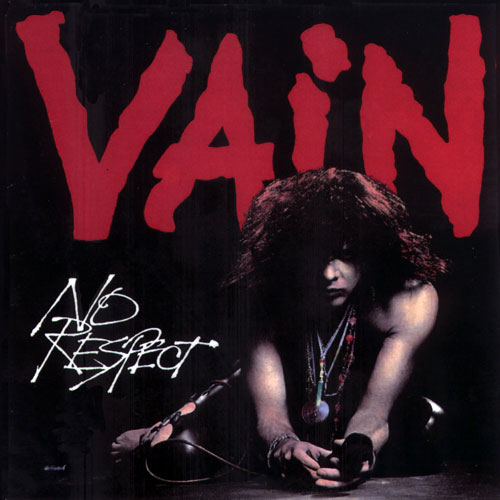
Vain, No Respect (Island, 1989)

The Big Idea: Glam rock gets mean, down and dirty

Choice Cuts: "Secrets," "Beat the Bullet," "No Respect" and "Without You"

Sonic Brethren: Spread Eagle, Skid Row and Guns N' Roses

Fun Fact: Davy Vain is the cousin of metal songstress Lana Lane

Like many bands from the era, San Francisco's Vain should have been more popular than they were. Charismatic frontman Davy Vain got his start as a producer on Death Angel's first album. But his eponymous outfit had nothing to do stylistically with the Bay area thrash sound. Instead, Vain offered a tough yet accessible mainstream sound that focused on hooks, while visually going for a dark glam image.

No Respect rips out of the gates like a winner with the first cut, "Secrets." As a brutal and jagged rhythm guitar riff erupts out of the right speaker, Vain himself starts cooing before abruptly erupting into a scream ("Nah-nah-nah-no secrets") as the rest of the band's syncopated slamming begins. This is raw, energetic rock from a band that sounds like it's been in the gutter for ages.

How do you follow-up an opening salvo like that? With "Beat the Bullet," the disc's first single. "Bullet" opens with a rumble of bass and slashes of wah-wah guitar, the interplay of guitarists Danny West and James Scott recalling that of Guns N' Roses axemen Slash and Izzy Stradlin.

By the time you get to the seventh cut -- the title track -- Vain are really hitting their stride and stretching out to encompass more sonic textures. "No Respect" opens with an element of mystery as chiming harmonics and somber acoustic fretwork obscures cryptic whispering. But the unplugged intro is just subterfuge; the song locks into a blasting guitar-and-drums groove soon enough and Vain's vocal delivery goes from hushed to dark and urgent. This is one vocalist who has a great command of dynamics.

Another nuanced vocal (and band) performance comes in "Without You." The only bona fide ballad on the album, "Without You" is also the longest cut on No Respect. Vain milks his voice for emotion, while the band adds a touch of orchestration for dramatic effect. But what it takes nearly six minutes for the act to say a better group could probably pull off in little more than half the time. The lyrics (see below) might be a little forced too, but they're very right for the time period.
"Like a candle in the wind / I'm easy to put out / Like the picture through your window / You see right through my heart"
Any momentum that might be lost on "Without You" is regained on the disc's final track, "Ready." At two minutes, 59 seconds, "Ready" is a punk-fueled romp through the "Johnny B. Goode" riff. It's a crucial cut that extols the virtues of partying and rock & roll at 140 beats per minute. This track would have made a great set closer in concert, with guitarists West and Scott trading off wild, reckless licks as the rhythm section kicks the tune into double time for a breathless finish. A perfect end to an almost perfect album.

Wednesday, October 11, 2006

Hair Apparent: Two-Bit Thief

(Editor's note: This is the fourth installment in a series about old albums that don't quite qualify in the Lost Classics category, yet still warrant a closer look.)


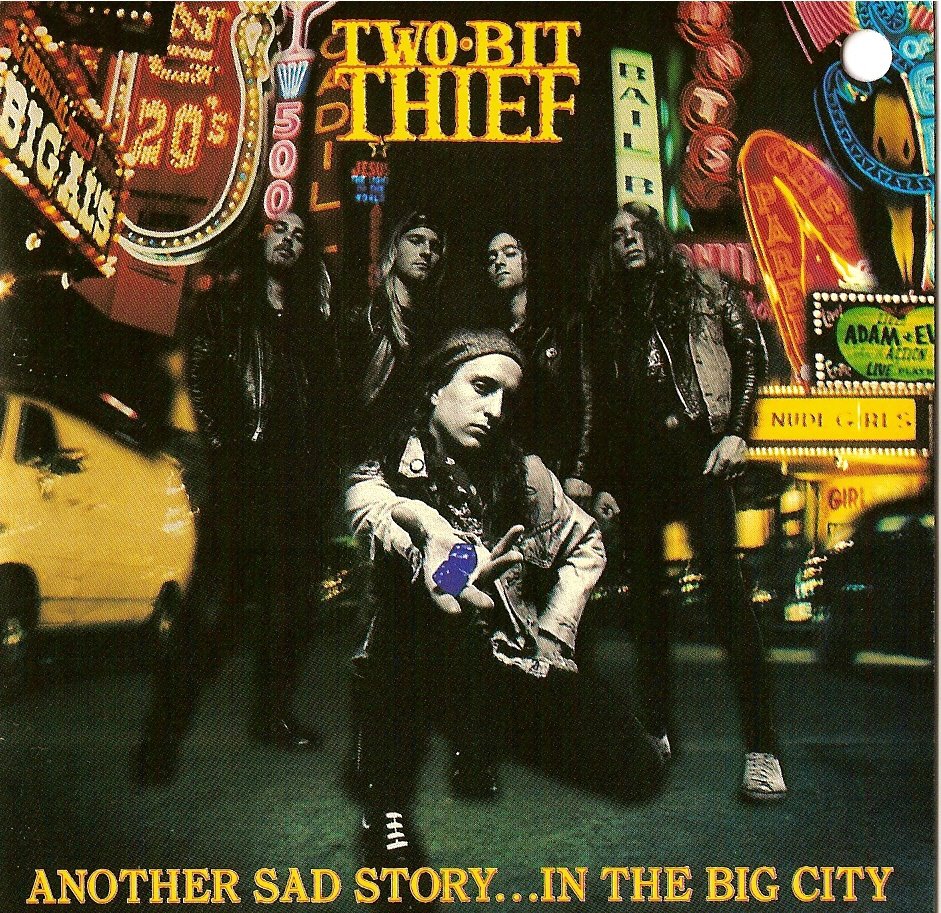
Two-Bit Thief, Another Sad Story . . . In the Big City (Combat, 1990)

The Big Idea: Former crossover act tries to re-invent itself as edgy hard-rock band

Choice Cuts: "Desperado," "Folsom Prison Blues," "Broken Hearts" and "Hard Times"

Sonic Brethren: Circus of Power, Junkyard, Manitoba's Wild Kingdom

San Francisco is best remembered for its thrash-metal scene, but the city also yielded some great bands in other genres. Two-Bit Thief was among the non-thrash acts that called the Bay area home. The group's debut disc, Another Sad Story . . . In the Big City, showed a lot of promise, but never amounted to much for the band.

Much like Junkyard or Manitoba's Wild Kingdom, TBT featured musicians who came up in the punk rock scene and wanted to explore a more commercial hard rock sound. Indeed, vocalist Andy 'Airborne' Andersen, guitarist Chris Scaparro, bassist Rick Strahl and drummer Eric Brecht all recorded with the crossover act Attitude Adjustment. The only "new" member in TBT was guitarist Ron Shipes.

Despite the group's roots, the only remnant of hardcore music is the shouted gang vocals that adorn several of Another Sad Story's 12 tracks. Otherwise, this is (mostly) straight-up gritty hard rock from the gutter, with an occasional thrash riff worked in for good measure. Bouts of slide guitar give the record a rootsy feel in a few places, while Brecht conjures up the specter of Guns N' Roses' Steven Adler through the liberal use of his cowbell.

The self-righteous social consciousness of thrash seeps into the lyrics of "Industry" and "Crime," but otherwise Another Sad Story is an unrepentant 42-minute joyride that revels in the vices of urban decay. Standout tracks include "Desperado" and "Folsom Prison Blues." The former is a tale of gambling that provided the likely inspiration for the album's cover shoot. Meanwhile, the latter is an ingenious re-working of the Johnny Cash classic that draws equally from punk rock, metal and rockabilly all in the space of two minutes and 40 seconds. It's nice to see a band cover someone other than the usual suspects. Not quite as inspired is the album's closer, a cover of Rose Tattoo's "Remedy."

Another Sad Story ultimately didn't have the commercial muscle the band had hoped. Regardless, this is a strong effort and a pleasant departure from the standard Bay area sound.

Tuesday, September 26, 2006

Hair Apparent: Great White

(Editor's note: This is the third installment in a series about old albums that don't quite qualify in the Lost Classics category, yet still warrant a closer look.)


Great White, Hooked (Capitol, 1991)

The Big Idea: Blues-rockers make a (mista) "bone"-afide grab for arena-rock stardom

Choice Cuts: "Call It Rock N' Roll," "The Original Queen of Sheba," "Desert Moon" and "Afterglow"

Sonic Brethren: Kix, Cinderella, Tesla and AC/DC

It's nearly impossible to talk about Great White these days without mentioning the 2003 fire in a Rhode Island nightclub that killed 100 people. Yet while the focus understandably remains on the tragedy, people have nearly forgotten about the great blues-based hard rock once made by the Los Angeles quintet.

Hooked was frontman Jack Russell & Co.'s fifth full-length studio album and aimed to recapture the success of the band's double-platinum breakthrough effort, 1989's . . . Twice Shy. While it never matched it predecessor in sales, Hooked remains one of Great White's better efforts.

The platter kicks off with the four-on-the-floor stomp of "Call It Rock N' Roll," the disc's first single. Russell addresses the censorship of parent groups like the PMRC with the lyric "There's trouble all around/Trouble with the PTA/Tell me whatcha gonn do?/Takin' all our highs away" while guitarist Mark Kendall cuts loose with some tasty licks in the vein of Chuck Berry. The next track, "The Original Queen of Sheba" is built on a hook with a lot of down-home twang -- so much that it even bears a strong resemblance to "Gyspy Road" by Cinderella!

But Great White are capable of more than just straight-up rock. "Lovin' Kind" is a piano ballad that anticipates the unplugged direction the band would take on their rootsy 1994 effort, Sail Away. While never released as a single, "Lovin' Kind" would have been a good candidate to capture some of the market dominated by keyboard-laden tunes toward the end of the hair metal movement.

The remainder of the album displays a variety of styles from the hardest-rocking cut "Desert Moon" to the expansive swamp boogie "Congo Square," the latter checking in just shy of seven minutes in length. Laidback acoustic guitars dominate cuts like the lazy, back-porch jam "South Bay Cities" and an album-closing cover of the Small Faces' "Afterglow."

They couldn't have known it at the time, but Great White's interpretation of "Afterglow" ends the album on a somewhat prophetic note. Though Hooked would hit the gold mark shortly after its release, none of the band's subsequent albums would ever go gold or platinum again. Hooked's sales of 500,000 copies was like a brief coda to the two million-deep sales of . . . Twice Shy. Afterglow, indeed.

Tuesday, September 12, 2006

Hair Apparent: Kik Tracee

(Editor's note: This is the second installment in a series about albums that don't quite qualify in the Lost Classics category, yet still warrant a closer look.)


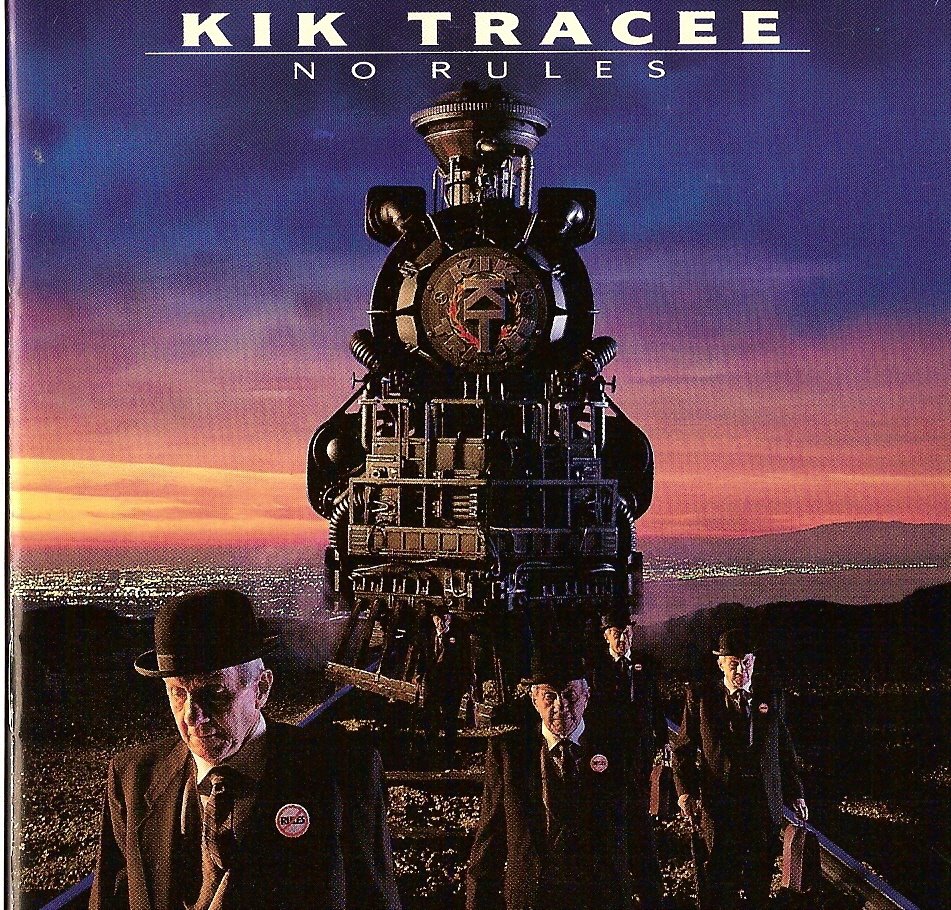
Kik Tracee, No Rules (RCA, 1991)

The Big Idea: Dana Strum protégés deliver nuanced, ballad-heavy hair metal

Choice Cuts: "You're So Strange," "Big Western Sky," "Lost" and "Fade Dunaway"

Sonic Brethren: Slaughter, the Cult and Guns N' Roses

1991 will long be remembered by '80s metal aficionados as the year Nirvana arrived to sound the death knell for hair metal bands. It also happens to be the year that Los Angeles quintet Kik Tracee released its debut disc, No Rules. At the time, Kik Tracee and No Rules had a lot in their favor: big hooks, great songwriting, management courtesy of Sharon Osbourne and a celebrity metal supporter in Slaughter bassist Dana Strum, who produced the disc.

The album's two singles -- the rambunctious, forced bravado of "No Rules" and the slower, dreamier "You're So Strange" -- are a study in contrast. It's as if frontman Stephen Shareaux & Co. didn't know whether they wanted to rock or croon ballads. The latter tune manages a bit of both: it opens with a beautiful reverie of an arpeggio that dominates the tune's verses, while the chorus delivers a radio friendly hook that rocks within moderation. In a metamusical moment, Kik Tracee use the same arpeggio to end the album in "Fade Dunaway." The brief tribute to movie queen Faye Dunaway leaves you with a tantalizing taste of golden Hollywood as its fades off into the sunset in just 41 seconds.

Some of the best material on No Rules is the lighter, more balladic fare. While "You're So Strange" was the most commercial of the disc's dramatic ballads, "Big Western Sky" and "Lost" also benefit from slower tempos, acoustic fretsmanship and introspective lyrics.

It's on the hard-edged material where Strum's production really takes the spotlight. The rocker-cum-producer sets the tone for Kik Tracee's unique take on Simon & Garfunkel's "Mrs. Robinson" with nearly a minute of atmospheric air raid sirens ("War Pigs," anyone?) and machine gun fire sound effects as the tune builds up. Likewise, "Trash City" uses touches of helicopter and police siren sound effects to set a narrative mood. As a tale of urban decay, "Trash City" is a fitting companion piece to, say, Guns N' Roses' "Welcome to the Jungle" or Babylon A.D.'s "The Kid Goes Wild."

Much has been written comparing Kik Tracee to GN'R. I believe the comparison -- which probably stems largely from Shareaux's penchant for nasally vocals à la Axl Rose -- isn't wholly accurate. In fact, the darker edge of the band is more in line with goth-inspired rockers the Cult. Witness "Velvet Crush" as Shareaux does some distinctly Ian Astbury-like wailing.

There's no debating that Kik Tracee wears its influences on the sleeve. After No Rules, they completely revamped their sound for their final recording, the 1992 Field Trip EP. Would Shareaux & Co. have continued their sonic explorations and developed a sound all their own on subsequent releases? We will never know.

Tuesday, August 29, 2006

Hair Apparent: Frank Gambale

(Editor's note: This will be the first in a series of posts about albums that don't quite qualify in the Lost Classics category, yet still warrant a closer look. It's dedicated to those efforts that aspired to greatness, but only barely grazed it -- the "hair apparents" of the metal world.)


Frank Gambale, The Great Explorers (JVC, 1993)
The Big Idea: Jazz-fusion meets the lighter side of '80s metal

Choice Cuts: "The Great Explorers," "Duet Tuet" and "She Knows Me Well"

Sonic Brethren: Joe Satriani, Steve Vai, Gary Hoey, Van Halen

Frank Gambale is perhaps best known for playing with jazz fusion piano master Chick Corea, but his melodic shredding has a lot of '80 metal crossover appeal. Gambale's The Great Explorers is one of the most rocking platters in his discography. In keeping with the album title, he is pictured on the cover looking like an intrepid adventurer, posed with his choice tool of conquest -- an Ibanez guitar. He covers a lot of sonic territory with that celebrated instrument -- both on the album as a whole and on the microcosm of the three featured tracks -- so let's begin.

The disc's title track opens with a deceptive cadence: a few bars of clean, jazzy guitar work anchored by unorthodox drum patterns. The song's true character doesn't even emerge until a little shy of the minute mark. It's then that we first hear a cascading synthesizer riff that sounds like the lost keyboard work of Eddie Van Halen buttressed by blasts of distorted guitar and tom-tom rolls on the drums. The abrupt change leads into the song's main theme, with Gambale delivering an ultra-melodic melody that's repeated throughout the song.

The Van Halen influence continues through the next track, "Duet Tuet." Clocking in at a mere 43 seconds, this number is more like an unofficial intro to "She Knows Me Well" rather than a full-fledged song in its own right. The short tune allows Gambale and drummer Jonathan Mover to do some tandem shredding in the vein of the Eddie and Alex Van Halen's intro to "Hot for Teacher."

After the frantic fret and skins bashing of "Duet Tuet," "She Knows Me Well" offers a lush, romantic melody that meanders along at a reflective and dreamy pace. Guitarist Gary Hoey shares a co-writing credit on this tune, but it's Gambale's playing that takes it to another level. He caresses his guitar so tenderly that it's hard to imagine "She Knows Me Well" was inspired by anything other than the bittersweet experience of first love. Think about the soaring, emotional fretwork of Steve Stevens in the "Top Gun Anthem" and you can begin to understand the vibe of this tune.

While the remainder of The Great Explorers may be a bit too jazz fusion to appeal to most metalheads, these three tracks are worth a listen. I don't know if they're available on iTunes, but they'd definitely be worth the $2.97 if so.