Wednesday, April 21, 2010

Ratt's Infestation CD review (2010)


Ratt are back and sounding better than ever with Infestation (Loud & Proud/Roadrunner), their first album of new music in 11 years.

With three-fifths of the band's classic lineup -- singer Stephen Pearcy, guitarist Warren DeMartini and drummer Bobby Blotzer -- still intact and some new blood injected into the band, it's no wonder the Los Angeles veterans are in particularly rare form on this latter-day hair metal classic.

Robbin Crosby is, of course, RIP, while original bassist Juan Croucier has long been MIA and has since been replaced by four-stringer Robbie Crane. Joining the fold to give the band a dual-guitar attack is Quiet Riot guitarist Carlos Cavazo.

Having two legendary six-stringers like DeMartini and Cavazo in the studio must have presented at least some temptation to producer Michael Baskette (Limp Bizkit, Chevelle, Incubus) to push the guitars way up in the mix at the expense of the rhythm section. But that's not the case.

Sure, the guitars and vocals jump out at you, but Crane and Blotzer also stand out with a clean, clear rhythm presence. This is one record that you can actually hear the bass on! In fact, Baskette's studio style recalls the crisp production work on 1986's Dancing Undercover -- the last truly stellar Ratt record.

Below is a track-by-track review of Infestation.

1. Eat Me Up Alive

Infestation opens with an irrepressible blast of a song that almost borders on '80s power metal in the vein of Judas Priest. Pearcy's threatening opening lyrics -- "Tell me all your secrets now / as I lay you on the bed" -- recall Priest's "Eat Me Alive."

There's even a breakdown at 2:15 that's reminiscent of the one in Priest's "The Sentinel." Pearcy engages in some brief Halford-ian wordplay during the breakdown and then DeMartini and Cavazo use the solo to trade barbed-wire licks like they're Glenn Tipton and K.K. Downing.

Who would've thought Ratt had a Defenders of the Faith moment in them?!


2. Best of Me (Metal Mixtape favorite!)

After the Birmingham, England-like metal blight of "Eat Me Up Alive," we go straight to sunny California's Sunset Strip for this stellar single.

From the moment the chunky, melodic riffing of the song's intro kicks in with a sublime DeMartini lead over top, you know you're in for something memorable. It's the kind of music that can appeal to longtime fans without sounding like a retrospective rehash. It's amazing that this storied L.A. act can sound this good after all these years.

3. A Little Too Much

Another energetic number that contains some of the most dense guitar shredding of the record. This is a tough trash-talking rocker. Love that tolling of the bell around 3:10, too! It's just a moment, but it's a nod to the history of the genre's roots that calls to mind AC/DC's "Hell's Bells."

4. Look Out Below

An almost "Way Cool Jr." style jam with some bounce and shuffle, and touches of wah-wah on the guitar during the hook. The band hits double-time to end this track on a high note.

5. Last Call (Metal Mixtape favorite!)

This is an almost AC/DC-like call to debauchery, with a riff that recalls the Antipodeans' "Riff Raff" filtered through the Sunset Strip. Things get loose as a goose when the bridge comes along and there's a blues shuffle à la Tora Tora before kicking into the driving hook.

The solo opens with another Priest-ish moment, as DeMartini and Cavazo hit some tandem ascending runs that conjure up Tipton and Downing all over again.

6. Lost Weekend (Metal Mixtape favorite!)

Here it is, another Holy Grail moment for the hair metal faithful. Opening with an accentuated rhythm borrowed from early Mötley Crüe, "Lost Weekend" is the real deal with big chunky slabs of melodic riffing and party-hearty lyrics that show us all how to let our hair down.

It makes Pearcy's opening question on this track -- "Are you ready for big fun?" -- a needlessly rhetorical inquiry. Ah, Stephen, we were born ready. Where were you through much of the '90s when we needed you, while most rock fans were turning into depressed coffee-drinking losers?! Welcome back, boys!

7. As Good As It Gets

Slow, sleazy grooves dominate this mid-tempo number as Pearcy pays tribute to making love to his wife. Is it just me or does Stephen's voice have an almost Lemmy-like hoarseness on this track? In fact, this song feels kind of like a slow, heavy blues that Motörhead might pull off.

8. Garden of Eden

Here the record, in my opinion, begins to hit a lull. "Garden of Eden" just doesn't seem catchy, despite the Sabbath-y stomp of the verse with its stops and starts à la "War Pigs." It's almost like Ratt trying their hand at stoner rock.

Checking in at a very short three minutes, "Garden of Eden" feels like it's missing something. What's missing, though, I can't say. But this song feels to me like it was an afterthought that would have been better as a B-side.

9. Take a Big Bite

Another raunchy rocker with some nice harmony runs from DeMartini and Cavazo in the solo. Viva la double-guitar attack of classic metal! "Take a Big Bite" reverses the dull trend that started with "Garden of Eden."

10. Take Me Home

This is as close as we get to a power ballad on Infestation. "Take Me Home" has a dreamy sound, with guitars that mimic violins during the verses (think Boston's Tom Scholz on Third Stage) and nice orchestration courtesy of producer Michael Baskette to heighten the sense of drama.

Sure, it's a little left field for Ratt, but it plays nicely into the sensitive side of the bad boy stereotype that Pearcy and the band cultivate. And that's a big part of what makes the hair-metal genre so appealing to men and women alike.

11. Don't Let Go (Metal Mixtape favorite!)

At last, the final send off to a great album. "Don't Let Go" was co-written with John Corabi (Union, Mötley Crüe) and has that daring, driving guitar sound that feels big, edgy and dynamic like vintage Van Halen.

Pearcy's opening line is "I'm gonna get me some leg tonight for sure / and I don't care who I'm with." Um, when was the last time you heard anyone say that since David Lee Roth did it in "Unchained"?! That was 1981, for chrissake!

Bravo, Stephen! A heartfelt "thank you" to Ratt for making us remember the good times and creating brand-new music for us to make memories with in the future.

Wednesday, April 14, 2010

Whitesnake, Slip of the Tongue CD review


David Coverdale must not have been a happy camper in 1989. With ace guitarist Adrian Vandenberg injured and Vivian Campbell out of the fold, the British frontman was getting mounting pressure from Geffen Records to follow up on the multiplatinum breakthrough success of Whitesnake's self-titled 1987 effort.

No wonder then that Coverdale tapped musical chameleon Steve Vai to handle all guitar duties on 1989's Slip of the Tongue. After all, Vai was the "go to" guy of choice for everyone in the hard rock world long before collaborations and guest appearances on other people's record became the norm in popular music.

Vai had filled Yngwie Malmsteen's sizable shoes after the Swede's departure from Alcatrazz, and David Lee Roth knew he was the only man who could play his foil after the blond-maned rocker's years with Eddie Van Halen & Co.

Below is a track-by-track take on this quintessential arena metal platter.

"Slip of the Tongue"

A heraldic keyboard intro and quick doses of Vai's harmonic flash open the record with a sense of drama and pizazz. The hook is relentless and rocking. Lusty lyrics conjure images of Coverdale cavorting with then-wife Tawny Kitaen on MTV in a million homes. Welcome back, boys.

"Cheap an' Nasty"

Coverdale gets the record's most awkward moment out of the way early. Maybe he was just playing to Vai's recent resume, but spoken Roth-isms like "Just to the left, love" and "Don't talk with your mouth full" during the song's breakdown sound very un-rock & roll when it's the Queen's English coming out of your mouth.

Even a guest appearance by an ad hoc singing mob called "The Delberts from Hell Chorus" -- featuring Coverdale's former Deep Purple cohort Glenn Hughes -- can't rescue this song from sounding trite and tired.

"Fool for Your Lovin'"

In order to score his first and only No. 1 pop hit, Coverdale dug deep into Whitesnake's history to reprise "Here We Go Again" -- a song that first appeared on the band's 1982 album Saints & Sinners.

So it was only natural that Coverdale would look back to 1980's Ready an' Willing to try to capture the gold again. However, it's the bluesy edges of this track that prevent it from being pop-metal paradise.

"Now You're Gone"

The first of two power ballad-ish moments aimed at the "Here We Go Again"/"Is This Love?" audience.

This mid-tempo number has all the hallmarks of what could be a classic: the keyboard heaven intro with a searing, melodic lead; a few plaintive lyrics about lost love to open the song over a bed of lush keys; a quick cut to a metallized bridge; and the payoff of an arena-rock-sized hook meant for singing along to.

But it all feels a bit "by the numbers" and like it's been piece together from disparate parts, more a product of studio stitchery than anything else.

While we're on the topic of studio work, it never ceases to amaze me that you can still hear unintentional noise bleeding through during the quiet parts on some of these big-budget major label releases.

Pop on a pair of headphones and listen at exactly :21 seconds during the intro to hear a muffled voice in the right channel. Later, at :26 seconds, you can hear an even fainter sound of what seems to be someone in studio laughing as Coverdale trails off from the song's opening lyric.

Perhaps studio whizs Mike Clink and Keith Olsen were too busy producing the Sea Hags' self-titled debut and the Lean on Me soundtrack (!) in 1989 to notice in the final mix!

"Kittens Got Claws"

Was Steve Vai the right fit for Whitesnake? Well, he certainly brings a sense of humor to heard-it-all-before material like "Kittens Got Claws" when he makes his guitar meow and purr during the intro and outro. His vibrato work on this one has that quintessential Vai sound -- as plastic and flexible as a melting watch in Salvador Dali painting.

"Wings of the Storm"

After the rockin' comic relief Of "Kittens," things gets deadly serious again with the driving metallic riffing of "Wings of the Storm." Anyone notice the musical similarity between this number and "Bark at the Moon"? No surprise really, considering that bassist Rudy Sarzo and drummer Tommy Aldridge both laid rhythm for that mid-1980s Ozzy Osbourne classic.

Of course, Vai makes "Wings of the Storm" his own during the solo. Check out the extended descending fretboard run at 3:17 for proof.

"The Deeper the Love"

While "Now You're Gone" may have been the heir apparent to "Here We Go Again," "The Deeper the Love" is my pick as the stronger of the two power-ballad singles.

Coverdale layers his airy vocals like cotton candy over dreamy keyboards. The guitar work rocks you gently with Vai getting extra texture out of what sounds like a bit of finger-plucking at the end of the melody line. And that simple, insistent drum beat is the bedrock for what might have been a wildly popular hit single.

It all comes together in a more organic way than "Now You're Gone," which has just enough moving parts to feel unfortunately forced. "The Deeper the Love", by comparison, just flows seamlessly. To paraphrase Marlon Brando, this one shoulda been more of a contender.

"Judgment Day"

Coverdale has often been accused of being a Robert Plant rip-off and "Judgment Day" does little to counter that belief. A vaguely exotic stampede of percussive chords and subtle sitar work call to mind Led Zeppelin's "Kashmir."

"Slow Poke Music"

This song has an interesting, stuttering rhythm during the chorus. But otherwise it's not too memorable, despite nice playing from Vai that almost recalls his gritty guitar work on "Tobacco Road" with David Lee Roth.

"Sailing Ships"

Opening with minstrel-like acoustic work reminiscent of Ritchie Blackmore, "Sailing Ships" is the perfect end to Slip of the Tongue.

Toward the end, an extended electrified coda erupts in a flurry of Led Zeppelin-esque sonic stomping. Sublime, soul-searching lyrics like "You'll find that you're the only one / can sail your ship across the sky" leave you with a sense of wonderment and awe at the possibilities of life.

In the last moments of the song, Coverdale hits a dramatic high note that rivals the one in "Still of the Night," while Vai's guitar echoes off into eternity.

Could this be Whitesnake's "Stairway to Heaven," with its meld of unique styles into an epic songwriting structure? Perhaps. This much is certain, though: Like a class act, Whitesnake leave you wanting more with "Sailing Ships."

Tuesday, March 30, 2010

Steelhouse Lane, Slaves of the New World CD review


Here are just a few highlights from this stellar disc:

"Give It All Me"
A heavy blues-rock opener that's fairly predictable until the 2:30 minute mark. That's when you get a little taste of the band's unconventional flare for the dramatic with singer Keith Slack's wordless syllables echoing while guitarist Mike Slamer coaxes interesting tones out of his axe. It's just for a moment, but it's a preview of more of the band's experimental side to come later on this record.

"Find What We're Lookin' For"
Instantly the most catchy track on the entire album. The combo of Slack's voice and Slamer's fretwork call to mind Don Dokken and George Lynch, with the song sounding at moments like Dokken's "Burning Like a Flame."

A dramatic pre-chorus about a soul-searcher sung over piercing razor-sharp arpeggios and some cool keyboards resolves with a feel-good refrain with choir-like layered vocals.

When Slack pleads "We've come too far / We ride too long / One love, one heart / Deep inside / we'll find what we've been / looking for," well, Steelhouse Lane will make you a believer. This is music that will make you hopeful again.

Simply put, a masterpiece.

"Son of a Loaded Gun"
A bit too imitative of the "Wanted Dead or Alive"/Blaze of Glory vibe and about a decade too late at that. But this does help fulfill the minimum requirement that every good AOR album have at least one acoustic-based track.

"Turn Around"
Opens with unique echo-laden guitar work that has a mysterious air to it. Later, Slamer's singular fretwork has flashes of inspiration that meld the finger tapping and harmonics of Eddie Van Halen with the fusion sensibility of Allan Holdsworth. Best of all, it all gives way to a radio-friendly hook that perfectly showcases the band's knack for combining woodshed musicianship
with commercial instincts.

"Slaves of the New World"
Heavily percussive guitar percolations ushers in a wild romp à la the abandon of Van Halen's "Tora Tora." Definitely the most unique on the album and a cool focal point as the disc's title track. We also get a hint of social consciousness with lyrics that survey the last several hundred years of history. Slack begins by decrying the loss of the plight of native American Indians and then likens their enslavement to that of the modern person at the hands of technology...unless I'm reading too deeply into this song!

And who's that making a cameo at the 3:00 minute mark? Why, it's that familiar opening voice from the Scorpions' Humanity Hour 1!


"All I Believe In"
This is Slamer's moment to shine, with an extended solo intro against a lush backdrop of heaven-drenched keyboards that lasts for more than a minute. His playing his a beautiful yet mournful tone that I can only liken to "Rain" -- Jason Becker's amazing solo guitar piece.

What follows after the intro is a true ballad for the romantics among you with a strong sense of melody and an even stronger vocal presence.

"In Too Deep"
A fun rocker with a chunky mid-tempo riff that recalls Loudness' "Let It Go." A nice companion piece to the go-for-the-throat melodic energy of "Find What We're Lookin' For," albeit a little more sedate than that gem.

Monday, March 08, 2010

Spiders & Snakes' Arachnomania CD review

This 1991 dark glam release from the Los Angeles-based Spiders & Snakes was perhaps a day late and a dollar short for its time, but it's still a fun listen regardless. Below is a track-by-track review of this five-song disc.

"California Slide"

Starts out with a strong opening riff that has hints of Ratt's "You're In Love" with several whammy bar workouts in under a minute. The hook, however, is extremely obnoxious with singer-guitarist Lizzie Grey's incessant shrieking -- Ya sliddddeee...sliddddeee! Strong musicianship, but the vocals are a definite acquired taste. Fortunately, Grey's vocals are never quite this annoying again on Arachnomania.

Lyrically, you have the typical tales of gutter and glam: "It's getting so that nobody can think anymore / and everybody likes it that way / How you gonna run away leave your small town behind / when you're born in L.A."

"Captain Tripps"

Taking a cue from Operation:Mindcrime, this track opens with a news snippet about the threat of Mexican prostitutes spreading AIDS to American men. Nice to see a burgeoning social conscience!

This track builds from power ballad arpeggios with touches of layered lead guitar during the verses to a chorus that's all NWOBHM double-paced hooks.

The Captain Tripps of the title is a menacing Twister Sister-like protagonist ("Captain Howdy," anyone?) and there's probably some connection between his misdeeds and the Mexican prostitutes, but it's eluding me at this point.

"The End of Marylou"

Lest Spiders & Snakes be branded a bunch of misogynists, the next track bounces back with a very sensitive story of a woman who wants out of a neglectful marriage. She dreams of going to school, and the lyrics show a deep empathy that lets belies the band's party hardy facade. It's the kind of populist songwriting you might hear from Bruce Springsteen or John Mellencamp.

The music is propulsive with possible hints of keyboard seemingly buried deep in the mix. It's almost Dio-esque in its momentum, in the way "We Rock" is a full-steam ahead chugger.

"Little Willie"

It's good to hear somebody picking up on this Sweet classic, joining the likes of Krokus with their classic cover of Sweet's "Ballroom Blitz."

Too often it seems like hair metal bands were only fixated on the equally talented Slade when it came to their choice of covers. Recall Quiet Riot with "Cum on Feel the Noize" and "Mama Weer All Crazee Now" and Britny Fox with "Gudbuy T'Jane."

Unfortunately, Grey's delivery sounds like he's Ric Ocasek of the Cars.

"Billion Dollar Babies"

Grey does a great Alice Cooper, mimicking every vocal nuance of Alice Cooper, right down to the double-tracked vocals of talking and singing during the verses.

Thursday, March 04, 2010

Overkill's Ironbound CD review

In tribute to their native New Jersey, Overkill have unleashed their 16th studio album, Ironbound, which takes its name from an industrial neighborhood in the city of Newark.

Ironbound has been called a "thrash metal masterpiece" in promotional materials. But that's probably more hyperbole than anything -- in the end, what you have is really just another solid, if occasionally above average, album from the Garden State metal veterans.

With Ironbound, frontman Bobby "Blitz" Ellsworth & Co. have delivered a record steeped in thrash history -- both the history of the band itself and the history of the genre as a whole.

Need proof?

• "Killing for a Living" opens with a D.D. Verni bass line that has shades of the late Cliff Burton's haunting, impressionistic "Damage, Inc." intro.
• The disc's first single, "Bring Me the Night," is built on a riff that clearly borrows from Diamond Head's "Helpless."
• The blood-pumping build up of "The Green and Black" around 2:35 is actually a case of Overkill plagiarizing themselves. Listen to the ascending riff madness of "Charlie Get Your Gun" off 2007's Immortalis from about 1:55 as a comparison and see if you don't agree.

This is not to say that Overkill -- rounded out by relative newbies drummer Ron Lipnicki and guitarists Derek Tailer and Dave Linsk -- sound tired or unimaginative on Ironbound. In fact, the core songwriting team of Blitz and Verni sounds more invigorated than most guys in their early 50s could ever hope to be.

But it's important to note the historical context for their latest music, especially as Overkill gain younger fans who may not be aware of the legacy this band has.

"Give a Little" is one of the most interesting tracks on Ironbound, and it offers a hodge-podge of a few different elements from the band's 1989 classic The Years of Decay. Its bitter lyrical tone calls to mind "Elimination", while the slow build-up section nicks the breakdown riff from "E.vil N.ever D.ies." But the track's truly standout moment comes during the pin-drop quiet breakdown at 3:40 when you can hear unique, almost bluesy timbres in Blitz's throat.

If you think you know the entire spectrum of this legendary screamer's voice, well, think again.

"Bring Me the Night," Ironbound's first single, is absolutely riveting and relentless go-for-the-throat thrash. One of its main riffs also happens to be a near carbon copy of the aforementioned Diamond Head track. Listen to Metallica's cover of "Helpless" to hear for yourself.

This, ultimately, is all a testament to Overkill's continuing tradition of fine metal craftsmanship. Any good album should hit on some familiar sonic touchstones and use them as a departure point to explore new horizons. And that's exactly what Ironbound does.

Monday, March 01, 2010

Blackeyed Susan's Electric Rattlebone CD review

After parting company with Britny Fox, frontman Dean Davidson launched his solo career with this 1991 effort. Electric Rattlebone was an homage to the Americana roots of rock & roll that aimed for a Black Crowes/vintage Rolling Stones kind of appeal. Below are just a few highlights of this unique album.

"Satisfaction"

After the juke joint jam of the album's self-titled intro, the first proper song we get is an E Street Band-like jubilee with horns, parlor piano and plenty of backbeat attitude.

Gone are the throat-straining vocals of the Britny Fox days. Davidson shows off a more realistic vocal style that doesn't sound like he's trying to achieve any sound other than his own natural timbre.

"None of It Matters"

This is by far the most unique track on Electric Rattlebone with Indian influences like that opening sitar riff, the guru chants peppered throughout and some orchestral overtones on the outro.

Fortunately, Davidson never loses sight of catchy pop hooks. Think of it as the Sgt. Pepper's moment of Electric Rattlebone. Also notable is a brief return of Davidson's over-driven Britny-style vocals at around 3:25 and elsewhere in the track.

"Ride With Me"

Here's a song that was, in a sense, ahead of its time. Pedal steel guitar mixed into the power ballad format predates the hair metal-country crossover by what, 10 years at least? "Ride With Me" is the most beautiful ballad on the album, and it wouldn't be out of place on commercial country radio in 2010.

"Best of Friends"

Almost like a companion piece to "Ride With Me," "Best of Friends" opens with a familiar sounding arpeggio that has definite shades of Cinderella. Beautifully moving piano lines, strong backing gospel-style vocals and a dedication to late founding Britny Fox drummer Tony "Stix" Destra makes this the most poignant track on the record.

"Heart of the City"

Davidson's tribute to his beloved Philadelphia. Heavily electrified slide guitar, clinking cowbell and an instantaneous groove that could make the most leaden footed among us move. Again, a touch of the rough-and-tough Britny-sounding vocals are punctuated throughout for added emphasis. A perfect end to an often overlooked album.

Thursday, February 25, 2010

Bruce Kulick's B3 CD review

Highlights of former Kiss guitarist Bruce Kulick's latest solo effort:

"Fate"

Post-modern rock with somewhat nonsensical lyrics delivered in that fast pitter-patter way reminiscent of Bob Dylan's "Subterranean Homesick Blues." Kulick's vocals are heavily processed to give it them that machine-line tinge. Just one song out of the gate and we already get a couple of lyrical nods to Kiss, as Kulick drops line that name-check "War Machine" and "Shout It Out Loud" -- ironically both songs that pre-dated his joining the band.

"Ain't Gonna Die"

The Kiss love continues with Gene Simmons co-writing and singing this track. As usual, fame and immortality are on Simmons' mind and the songwriting moves through twist and turns and some experimental orchestration at the end. Recommended for fans of the Demon's 1978 solo album.

"I'll Survive"

Pink Floyd-like strumming dominates this track that addresses Kulick's experience getting shot by a stray bullet a few years back. Sample lyric: "The warm, smoking gun couldn't take me away / My life was spared, I was blessed that day."

"Dirty Girl"

Ah, now we're finally getting to the heart of the album with this cut and the next. "Dirty Girl" is pure pop-rock paradise in the vein of Enuff Z'Nuff or some of Paul Gilbert's King of Clubs album. There's a strong, melodic footprint and perhaps the best, sweetest-sounding vocals of the entire album, courtesy of the Knack's Doug Fieger (of "My Sharona" fame).

"Final Mile"

A heart-achingly beautiful song that has harmonic shades of "God Gave Rock N' Roll to You." If you loved the vague classical feel and dual-guitar harmonies of Kiss' cover of the Argent song, you're sure to love "Final Mile" too.

Visit Kulick.net for more information.

Thursday, February 18, 2010

American Angel's Vanity CD review

American Angel may be a name that's new to many, but this New Jersey-based band has a history that dates back to the 1980s.

Italian-American frontman Rocco Fury is the only remaining member from the group's original lineup, but he's teamed up with paesan Mike Bisulca and several other talented Garden State musicians to resurrect this one-time dominant force in the North Jersey club scene. Fury's unique voice remains the driving force behind Vanity -- American Angel's first new studio album in 15 years.

The revamped lineup makes it clear that this ain't no nostalgic '80s love fest from the album's start. "Fixed in a stare and you're standing there / Never getting back to 1984," Fury sings to the naysayers during "Pantomind," a balls-out rocker that features electrifying stabs of bottleneck guitar and propulsive drumming. In fact, the only track that smacks of retro is "Don't Wait Up," with its Ratt-like swagger and lyrical machismo.

The bulk of Vanity is thoughtful, melodic hard rock, and there are also acoustic-based rockers and ballads like "Warm Inside" and "Another Day" to showcase the band's softer side. The disc's momentum only derails during an extended retread of Lynyrd Skynyrd's "On the Hunt."

The album's second half opens a more experimental vein. "End of the Night" surprises listeners with a guerrilla Latin percussion breakdown, while the guitar work in "Permanent Pause" has a sense of musical whimsy that would make Queen's Brian May proud.

Visit MySpace for more about this resurrected Italian-American band.

Monday, February 15, 2010

Ratt's Infestation: "Best of Me" CD single review

Ratt are back and sounding better than ever on this single from their forthcoming Loud & Proud/Roadrunner effort Infestation (due April 20).

Former Quiet Riot guitarist Carlos Cavazo takes credit for the music here and his style meshes seamlessly with guitarist Warren Demartini. From the moment the chunky, melodic riffing of the song's intro kicks in with a sublime DeMartini lead over top, you know you're in for something memorable. It's the kind of music that can appeal to longtime fans without sounding like a retrospective rehash. It's amazing that this veteran Los Angeles act can sound this good after all these years.

Stephen Pearcy's vocals sound timeless as if his voice hasn't aged a bit. He imparts every line with a bit of sly double entendre wit.

And the band's choice of producer Michael Bakette (Limp Bizkit, Chevelle, Incubus) seems a bit counter-intuitive but actually works. This is crisp, clean hair metal with an emphasis on amazing guitar and strong songwriting. Here's hoping the whole album bears out this assessment.

Tuesday, November 17, 2009

Trans-Siberian Orchestra's Paul O'Neill opens up about new Night Castle album

Somewhere between the worlds of arena rock and Broadway musicals lies Trans-Siberian Orchestra. The New York-based symphonic rock collective has become a holiday institution with its treatments of Christmas standards and well-known classical pieces as a part of a rock opera trilogy.

TSO first introduced itself to fans with 1996's now classic Christmas Eve and Other Stories, which has sold more than two million copies. 1998's The Christmas Attic and 2004's The Lost Christmas Eve continued the yuletide spirit.

In concert, every TSO performance includes a Pink Floyd-on-steroids laser show, towering bursts of pyrotechnic flames and imitation snowflakes drifting down on the audience as up to 24 tuxedo-and-evening gown clad rock musicians perform with an orchestral octet.

The band's spectacular success has led to two touring companies criss-crossing the country every winter. Composer/lyricist Paul O'Neill typically splits his time touring with both the East Coast and West Coast ensembles.

He often can be seen taking the stage in sunglasses and a leather jacket during intermission to thank the audience for their continued support.

"If it weren't for [the fans], I'd have to get a real job and I'd be in trouble," O'Neill quips during a phone call from New York. The hirsute visionary has also been known to strap on a guitar to perform TSO's enduring hit single "Christmas Eve (Sarajevo/1224)" in concert.

Now a new tale from O'Neill's pen entitled Night Castle has emerged —- and it's not exactly holly or jolly.

The double-disc Night Castle collection tells of a chance encounter between a young girl and an old soldier with a magical tale. It is only the group's second non-holiday album, following 2000's Beethoven's Last Night —- a Faustian fictionalization of the legendary composer's demise.

At the crux of Night Castle are the redemptive actions of a Khmer Rouge general who breaks rank with his murderous ideology to help a dying American soldier.

"I think it was [philosopher Edmund] Burke who said, 'Evil triumphs when good men do nothing.' If you see a mugging across the street, would you go over and help that person? You would certainly want them to help you." O'Neill says in explaining the moral questions pondered on Night Castle. "Civilization is not an accident. It takes eternal vigilance and it's at its most dangerous when it has been [safe] for a while…Evil is unbelievably patient."

Night Castle was originally due in July 2005, but the album only arrived late last month. Back in 2005, TSO composer/lyricist Paul O'Neill and his main collaborators, pianist Robert Kinkel and songwriter Jon Oliva, envisioned Night Castle as a straightforward rock album sans weighty themes.

But Night Castle's intricate storyline came to O'Neill in a flash of inspiration, much like all of Trans-Siberian's other narrative-rich material.

"Originally it was going to be just 10 songs, a regular record, but then Jon said, 'Now Paul, Trans-Siberian fans expect the stories,' and I knew [he] was right," O'Neill recalls, "so it went from being a 10-song regular album to a 26-song double album." A 68-page CD booklet that accompanies Night Castle features illustrations by famed artist Greg Hildebrandt.

The album's familiar blend of rocked-out classical music and hard-driving originals will certainly appeal to longtime fans.

"Tocatta - Carpimus Noctem" is a reprise of Bach's famous Toccata and Fugue in D minor, conjuring up images of Halloween with doom-laden organ and heavy metal riffs. "Moonlight & Madness" opens with the frenzied final movement of Beethoven's "Moonlight Sonata" before morphing into a fiery instrumental display of six-string fretwork and pounding percussion.

"Sparks" and "Dreams We Conceive," meanwhile, advance Night Castle's narrative with passionate vocals that owe as much to the theatrical bombast of Broadway as to the uplifting anthems of arena rock.

The collection's first single, "Nutrocker," is a nod to the group's holiday heritage. It features a guest appearance by bassist Greg Lake of Emerson, Lake & Palmer, who first introduced the Tchaikovsky-inspired instrumental into their repertoire in 1970.

O'Neill says Lake's involvement in re-recording the track came after the latter joined TSO onstage one night during their 2007 holiday tour. The two men bonded over a mutual love of progressive rock.

"With any other form of music, when you go into jazz and you do some kind of [different] music, it's no longer jazz. With blues, you go a certain direction, it's no longer blues. Reggae you do something [else,] it's no longer reggae," O'Neill recalls being told by Lake. "But progressive rock has no limits. It's always trying to push the envelope and try something different. You can do classical, you can do a waltz, you can do reggae, you do anything and that kind of artistic freedom is just great."

Tuesday, November 03, 2009

Queensrÿche frontman discusses American Soldier

When Queensrÿche undertook the recording of their latest album, American Soldier, it was an unprecedented move even for a band with such a richly experimental history in the studio.

American Soldier uses a wealth of sound clips—collected from dozens of audio and video interviews that singer Geoff Tate conducted with soldiers over the course of two years—to tell the universal story of U.S. military personnel.

"This was really a record that everybody in the band seemed to get into quite a bit," Tate reveals. "We liked the cinematic aspect of writing to the tapes, watching those and getting a feel for what the tone and the mood was like."

The result is an album bristling with powerful lyrics and equally powerful music that explores the nuances of a soldier's experience—from boot camp to battle, from separation anxiety while serving overseas to the challenges of returning to civilian life.

In all, Tate spoke to those who served during every American conflict from World War II to the present. What struck him most were the unifying themes that spanned generations and bridged experiences.

"I thought [with] all the different generations of [military personnel] I talked to they would be very different, but what I found was the soldiers' experiences were really rather similar," he says. "They're concerned about managing their fear, the loss of colleagues and friends and being separated from their families. These kinds of subjects were predominant in the conversations."

"Sliver," the disc's first track, opens with the barking of a drill sergeant and serves as an aural boot camp to indoctrinate the listener into military life. "Man Down!" employs breakneck-paced guitars and bludgeoning drums to explore post-traumatic stress disorder. "Home Again," by contrast, moves along at a gentle acoustic shuffle, with lyrics that create a narrative inspired by the letters of a deployed soldier and his young daughter at home.

"At 30,000 Ft," meanwhile, is one of the most gripping tracks. It details a pilot's emotional detachment from the act of bombing a city far below.

The band manages to distill the moral dilemma about inflicting so much damage while being separate from the experience with lyrics such as "I'll send the 'Pigs' away / the tortured painful cries / will never fall upon my ears / and never stain my elder years / my heartbeat is all I'll feel." The song alternates between a melancholy minor key melody to suggest the pilot's anguished mind and blitzkrieg power chords to recreate the chaotic sounds of an aerial strike.

It is this kind of attention to realistic emotional detail that makes American Soldier such a riveting listen and one of the band's most exciting albums in recent years.

Formed in 1981, Queensrÿche developed a signature sound by blending the aggression of New Wave of British Heavy Metal acts like Iron Maiden and Judas Priest with the artistic prowess of progressive rock acts such as Pink Floyd and King Crimson.

It was Operation: Mindcrime that first introduced Queensrÿche's fascination with themed concept albums. The 1988 opus told a complete narrative with a set cast of characters rather than being a collection of unrelated songs. The storyline was revisited for 2006's Operation: Mindcrime II.

1990's Empire further solidified the group's reputation as the thinking man's heavy metal band, selling more than three million copies and yielding their highest-charting single, "Silent Lucidity."

The band -- also featuring original members guitarist Michael Wilton, bassist Ed Jackson and drummer Scott Rockenfield, plus newly added second guitarist Parker Lundgren -- will play suites of music from American Soldier, Empire and 1986's Rage for Order during their current tour.

Also joining Queensrÿche on the road will be Lita Ford. The '80s metal songstress will use Tate & Co. as her backing band and together they will reprise her hits including "Close My Eyes Forever."

"We thought it would be fun instead of having a standard opening act kind of thing to have her come on stage with us and play some songs," Tate says.

Monday, October 26, 2009

Paris Keeling's End of Ride Revisited CD review


Paris Keeling
End of Ride Revisited (Surgeland)

Paris Keeling's End of Ride was one recording that really flew under the radar in 2006. Now fans of melodic rock have a chance to rediscover this modern classic with a new reissue that features bonus tracks and remixes. End of Ride Revisited is a study in contrasts -- from the rock star riffs of "Tears of Heaven" and "Head Straight" to introspective acoustic cuts such as "Life" and "She Was." It's precisely when the band dials down the decibels that faithful professions like the gently orchestrated "Free" and the reverential "Morning Song" shine.

This review originally appeared in the December 2009 issue of Christian Music Today.

Sunday, August 30, 2009

Living Colour's Corey Glover discusses new album


Living Colour seemed destined for recognition from the moment they first caught the eye of Mick Jagger in 1986 while performing at New York's legendary CBGB. The Rolling Stones frontman produced an early demo that helped the fledgling rockers land a record deal.

Singer Corey Glover, guitarist Vernon Reid, drummer Will Calhoun and original bassist Muzz Skillings released their 1988 Vivid debut to immediate success and eventual double-platinum sales. Their unique sound took a heavy metal framework and injected it with elements of art rock and avant-garde jazz that belied their bohemian New York roots.

If Michael Jackson broke the color barrier on MTV, it was Living Colour that fully integrated African-Americans into the white-dominated heavy metal scene. Groundbreaking videos for "Cult of Personality," "Glamour Boys" and other Vivid hits helped the band connect with a multicultural hard rock audience in a way few black rockers have since Jimi Hendrix.

Time's Up, 1990's sophomore effort, was critically praised though less commercially successful. A third effort, 1993's Stain, found bassist Doug Wimbish replacing Skillings. However, the album got lost in the wave of grunge rock and the band soon parted ways.

A comeback album titled Collideoscope arrived in 2003, but was followed by another down period as each member pursued different creative directions. Glover's path included a two-year stint from 2006-2008 as Judas in a touring production of the musical Jesus Christ Superstar.

"I loved doing Superstar. It was one of the best times I've had in a very long time," the singer admits. "It actually sort of spurred me on to want to make another Living Colour record because I enjoyed being on the road so much…[and] it made me really enjoy singing again."

Now the band's studio silence has been broken again with a new album, The Chair in the Doorway. According to Glover, it was Wimbish who played a key role in culling songwriting ideas from rehearsal tapes, soundboard recordings and the occasional studio session. His efforts helped lay the groundwork for the Chair recording sessions at Sono Studios in the Czech Republic.

"[Living Colour] had been on the road in Europe for a month and a half and we had a two-week break in between," Glover recalls. "And we said, 'OK, let's go into the studio and put down all these grooves [that Wimbish collected.]' A bunch of songs came out of it. That's how we knew we were ready to make an album."

Chair spans the gamut of sounds from heavy rockers like "Burned Bridges" and "DecaDance" to the slide blues-meets-modern rock vibe of "Bless Those."

"Behind the Sun," the CD's first single, opens with a fleet-fingered riff that ranks as one of Reid's most impassioned displays of fretboard wizardry in the entire Living Colour catalog. The song also suggests a sonic progression to U2 territory with spacious Brian Eno-like production work.

The single's lyrics—-a statement about human resilience after 2005's Hurricane Katrina—-were precipitated by Glover's travels to New Orleans with an activist group called NY2NO. The student-led organization arranges for groups of New York City teens to volunteer in the Crescent City.

"It's been four years since Katrina and people are still not home. There are still abandoned buildings, there are still [empty] lots," he says. "Despite whatever you want to say about how tragic it was and what missteps were made, people were still living. Life still went on."

Of course, Living Colour are no strangers to making thought-provoking music. Their 1989 hit "Cult of Personality" offered a pointed statement about media manipulation set to a head-banging soundtrack, and it earned the band their first Grammy for Best Hard Rock performance. In 2007, the group re-recorded this signature tune for Guitar Hero III: Legends of Rock.

The challenge that now lies ahead of Living Colour is striking a balance between old favorites and new material during their current North American tour.

"We're primarily a live band," Glover says. "A recording is just a moment in time. If you want to see how it evolved and where it went and where it is going, come see us live. Then go home, listen to the record and hear how it's changed. And know that we're going to come back and it's going to change from there."

Wednesday, April 09, 2008

The Sword's Gods of the Earth CD review

When the Sword emerged in 2006, no one quite knew how to take the Austin-based quartet. Four guys in their mid-20s who sang about wizards and warlocks like they were the little cousins of Ronnie James Dio?!

Now the Sword are back with their second album, Gods of the Earth, and it's something of a retro-metal manifesto. Black Sabbath may be the obvious influence here, but the Sword's style is equally indebted to mid-'80s thrash metal. "The Sundering" and "The White Sea" are built around the kind of staccato, palm-muted riffing popularized by Metallica, Megadeth and others.

Singer/guitarist John D. Cronise and guitarist Kyle Shutt make a formidable axe-wielding duo. Both musicians bring some of the virtuosity that defined the venerable guitar tag-teams of Judas Priest and Iron Maiden into the netherworld of doom metal. Drummer Trivett Wingo, meanwhile, makes it a trifecta. His commanding, punked-out performance recalls monolithic '70s kingpin John Bonham (symphonic gongs, anyone?), while bassist Bryan Richie stays buried in the mix.

If you're looking for a literary equivalent, Gods of the Earth could be the soundtrack for the fearsome black riders in The Lord of the Rings—all galloping thrash-metal riffs accompanied by strangulated, off-key vocals. To the believers, this album will be hailed as the second coming of NWOBHM-inspired thrash/doom. The nay-sayers, meanwhile, will look at titles like "How Heavy This Axe" or "Fire Lances of the Ancient Hyperzephyrians" and know this band may be teetering on the edge of Spinal Tap territory. To each his own…

Thursday, February 28, 2008

Lehigh Valley Rocks! The Best of 1984-1994 CD review

If famed musicologist Alan Lomax were reincarnated as an '80s metal aficciando, he might compile a release of field recordings like Lehigh Valley Rocks! The Best of 1984-1994. This two-disc compilation captures in loving detail the sounds of 27 bands from an almost forgotten frontier of the spandex nation.

Is it really any surprise that Pennsylvania's Lehigh Valley -- a blue-collar region long synonymous with steel production -- birthed a raucous cast of independent heavy metal and hard rock groups throughout the '80s and early '90s? While nearby Philadelphia spawned gold and platinum acts like Britny Fox and Cinderella, this neglected corner of the Keystone State gave rise to "could've beens" such as Shok Graffiti, Sweet Tequila and Vicious Barreka.

Disc one offers a parade of bands that might have easily enjoyed airplay and MTV support in their era. From the saccharine strains of Omynus' "Don't Ever Say Goodbye" to the lusty bravado of Teeze's "Party Hardy," Lehigh Valley Rocks! shows that unsigned hair metal is just as good as the corporate stuff. Elsewhere, Sweet Tequila take a salty romp through Black Crowes-inspired territory on "I Won't Be Crying" and Idle Threats ' "Find a Way" blends a galloping sound reminiscent of early Queensrÿche with pop-friendly hooks. Washed's epic and nuanced "Guilty," meanwhile, treads experimental territory and proves that you don't have to be Ravi Shankar to rock a sitar.

Disc two digs even deeper into the underground to spotlight the Lehigh Valley scene's heavier side. Groups like Vicious Barreka and Leviathen unleash the primitive ferocity of thrash metal, while Atom West is a crossover act in the vein of D.R.I. or early Corrosion of Conformity. A welcome moment of demented comic relief comes in the form of Vic Missy's "Terror/Cartoon Lady." The tune's disjointed song structure and menacing soundscapes evoke the creepiness of Mike Patton's Mr. Bungle project.

The compilation's carefully researched liner notes -- featuring brief band bios/lineups, songwriting/publishing credits and the bands' current websites or MySpace pages -- also deserve kudos. Lomax would be proud.

Wednesday, February 13, 2008

Mystery Bloom, Lifetime in the Heart CD review


New Jersey has proven time and again that it's always been a fertile ground for local talent. The now-defunct Mystery Bloom is the latest band of Garden State rockers to come to my attention. MB arose out of the ashes of N.J. club band Sinnocence and features three members from that long-gone outfit—guitarist Danny Roselle, bassist Nick Clemente and drummer Dave Garcia. Singer Ray Morales and guitarist Bob Gilmartin round out the MB lineup on Lifetime in the Heart, a reissue of the group's Frame of Mind debut.

The disc opens with the prog-metal stylings of "Frame of Mind," with strong Kansas-like group vocals and a vaguely Middle Eastern sounding guitar/keyboard riff. Vocals are, in fact, a big key to the MB sound. While Morales' voice has shades of late Badlands singer Ray Gillen, the entire group's dulcet throats drive songs such as "Life" and "Soulmate Serenade." The guys even hit a 4-part a capella harmony on "Paperback Writer," a cover of the Beatles' tune! In this respect, MB can be understood as a hard-rock band with real '60s and '70s pop roots; there's such an emphasis on harmony backing vocals in both the arrangement and execution of songs that you can almost hear echoes of legendary Motown vocal groups. Of course, the rock is never sacrificed on any of the tracks.

If MB has any fault, it's that their tunes make it almost too easy to pin down the musical reference points. "Adore" opens with an acoustic chord progression copped from Alice Cooper's "Only Women Bleed" before moving into a chorus that's reminiscent of Tesla's "Love Song." Meanwhile, "Life" sounds like it could have been an Enuff Z'Nuff outtake, with its Fab Four-like harmonies and gentle lyrical disposition. The disc only really falters on the Latin funk-rock jam "Pray Another Day," which at nearly 6 minutes is the longest track here. All in all, this is a solid effort with appreciable musicianship and a great knack for marrying prog-rock aspirations with pop tendencies.

Friday, February 01, 2008

Overkill's Immortalis CD review

Overkill has long been considered one of the second-tier talents of '80s thrash metal. While Metallica, Megadeth, Slayer and Anthrax got the lion's share of praise, Overkill typically flew under the radar. Yet the veteran band proves itself stronger and stronger with each new release; their 15th album, Immortalis, is no exception.

Opening with the one-two punch of "What It Takes" and "Devils in the Mist," Immortalis immediately roots itself with familiar sonic elements like the vicious snarl of frontman Bobby "Blitz" Ellsworth and the sonically destructive bass rumblings of D.D. Verni. "Hell Is" shifts gears between slow, sludgy Black Sabbath-like passages and frenetic thrashing that has all the fury of an epileptic seizure. "Charlie Get Your Gun," meanwhile, is the disc's pinnacle of frenzy; guitarists Derek Tailer and Dave Linsk shred so dynamically that drummer Ron Lipnicki can barely keep up with their percussive, atonal attack. It's this kind of organized chaos that's at the heart of Overkill's sound.

The sole moment of mainstream concession comes during "Walk Through Fire," which features a driving AC/DC-like rhythm and sleek, streamlined production reminiscent of Metallica's Black Album. The sound puts this cut more in the hard rock category than the metal one. But after 50 minutes of skull-rattling din, you need a diversion like this!

Younger fans of metal will appreciate Lamb of God singer Randy Blythe's guest appearance on "Skull & Bones." Yes, Blythe's presence validates Overkill in the eyes of a new audience. But with the strength of Immortalis, Blitz & Co.'s talents are never even in question. Overkill's music never goes out of style because it was never in style…and that's just the way their fans like it.

Friday, January 18, 2008

One from the Archives

Editor's note: This interview I conducted with Joey Vera ran circa 2000 in a now-defunct music magazine called Smug.

Armored Saint saw it all in the '80s: Club gigs with bands like Metallica and W.A.S.P.; a slew of indie and major-label releases; and the death of guitarist Dave Prichard. In 1992 the band broke up, and alumni went on to Anthrax, Fates Warning, and DC 4. Now the Saint is back after an almost decade-long hiatus to resurrect metal with Revelation (Metal Blade). Bassist Joey Vera talks about the new album, Saint's cult status, and his penchant for African music.

With the recent glut of reunions in the heavy-metal world, what distinguishes yours?
This one is special because there's been this weird, underground mystique about the band since it broke up. What really helped the reunion along was that during the time that John [Bush, vocals] was touring with Anthrax, and myself with Fates Warning even, we were going to places we'd never been and meeting people we'd never met and there were a lot of questions about Armored Saint. A lot of people wanted the band to get back together. That played a big part in it. There was a lot of anticipation about it on an underground level.

Characterize the mood of the band these days.
The character of the band is really kind of simple: we missed being around each other and making this sort of music together. Our intention was to make a really brutal record with high-energy songs. We want to go out, play these songs live, and do what we did ten or 15 years ago. We're not overly concerned with selling records, it's more for the love of the music and the love of being in the band, almost like when we first started when we were 19.

You produced the album and also helped with engineering. What sort of production values were you going for?

Again, we were going with the simplicity aspect. I really wanted to make an old-school record. I wanted it very raw and very dry, without a lot of effects. It had to be dangerous sounding and had to have a lot of guitars. It just had to really tear your face off.

Your bass playing with AS had always been pretty traditional. On Revelation it's a little more funky. Has playing in FW changed your style much?
That contributed some, along with the past eight years. After Saint, I got involved with a lot of different things during the '90s. I played in several L.A. R&B and funk cover groups. I was also in an African band playing traditional African music, which included some reggae. That band was called Mixed Heritage and was a multi-ethnic eleven-piece. Pretty big band!

Explain ''No Me Digas," Revelation's limited-edition Spanish language bonus track.
The title literally means "Don't Tell Me," and lyrically it's really an abstract bunch of imagery. It's kind of about this part of your brain that conjures up evil, forbidden thoughts. The "Don't Tell Me" is the denial that you have in the logical side of your brain. It's about the push and pull of your psyche.

Saturday, January 13, 2007

ATLANTIC CITY BY WAY OF THE NORTH POLE:
A TRANS-SIBERIAN ORCHESTRA LIVE REVIEW


America's Playground in the East was painted red and green Dec. 28 when the Trans-Siberian Orchestra decked the halls in Atlantic City. Though the symphonic-rock collective has been touring annually every holiday season since 1999, the Boardwalk Hall concert marked TSO's debut A.C. engagement.

Featuring a group of tuxedo-clad rock musicians backed by an eight-piece orchestra, TSO wowed the crowd with their rearrangements of holiday standards and well-known classical pieces, plus original seasonal compositions and a laser-light show. Originals like "An Angel Came Down" and "This Christmas Day" boasted a distinct Broadway feel with booming, dramatic vocals buoyed by crunchy and melodic arena-rock riffs. Think the Great White Way meets the Sunset Strip in the North Pole and you're there.

TSO dedicated nearly two hours to a track-by-track enactment of their multiplatinum 1996 debut, Christmas Eve & Other Stories, using a baritone-voiced narrator between songs to detail the album's tale of an angel seeking the true meaning of the holiday spirit on Earth.

One of the set's many highlights was "Christmas Eve Sarajevo 12/24," a hit single that's nearly ubiquitous on radio at this time of year. The tune blended holiday favorites like "God Rest Ye Merry Gentlemen" and "Carol of the Bells" with blazing fretwork courtesy of guitarists Chris Caffery and Alex Skolnick -- themselves members of '80s metal bands like Savatage and Testament, respectively.

After a short intermission, the group returned to the stage and cut loose for another hour of jamming that combined edgy rock guitar playing with the classical flair of composers like Beethoven and Mozart.

By the end of the evening, however, exactly what constituted yuletide music was open to debate; a rendition of Carl Orff's brooding "O Fortuna" from the band's forthcoming Night Castle album was neither holly nor jolly. But the concert's final selection -- a full-cast reprise of "Christmas Eve Sarajevo 12/24" that was laden with pyrotechnic blasts -- brought TSO right back into the holiday spirit. In the end, the far-reaching blend of classical and rock music ensured that concertgoers would find something for everyone on their Christmas "Liszt."

Thursday, November 30, 2006

Hair Apparent: Vain

(Editor's note: This is the latest installment in a series about albums that don't quite qualify in the Lost Classics category, yet still warrant a closer look.)


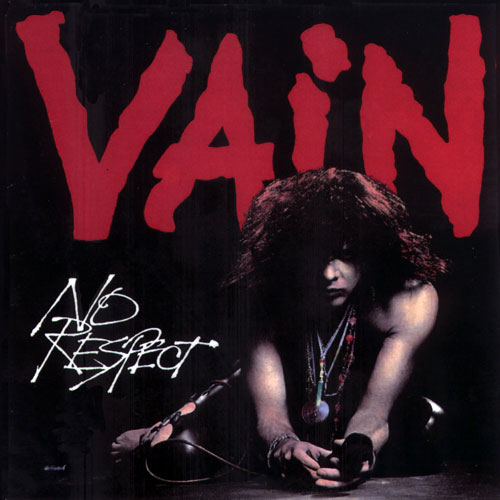
Vain, No Respect (Island, 1989)

The Big Idea: Glam rock gets mean, down and dirty

Choice Cuts: "Secrets," "Beat the Bullet," "No Respect" and "Without You"

Sonic Brethren: Spread Eagle, Skid Row and Guns N' Roses

Fun Fact: Davy Vain is the cousin of metal songstress Lana Lane

Like many bands from the era, San Francisco's Vain should have been more popular than they were. Charismatic frontman Davy Vain got his start as a producer on Death Angel's first album. But his eponymous outfit had nothing to do stylistically with the Bay area thrash sound. Instead, Vain offered a tough yet accessible mainstream sound that focused on hooks, while visually going for a dark glam image.

No Respect rips out of the gates like a winner with the first cut, "Secrets." As a brutal and jagged rhythm guitar riff erupts out of the right speaker, Vain himself starts cooing before abruptly erupting into a scream ("Nah-nah-nah-no secrets") as the rest of the band's syncopated slamming begins. This is raw, energetic rock from a band that sounds like it's been in the gutter for ages.

How do you follow-up an opening salvo like that? With "Beat the Bullet," the disc's first single. "Bullet" opens with a rumble of bass and slashes of wah-wah guitar, the interplay of guitarists Danny West and James Scott recalling that of Guns N' Roses axemen Slash and Izzy Stradlin.

By the time you get to the seventh cut -- the title track -- Vain are really hitting their stride and stretching out to encompass more sonic textures. "No Respect" opens with an element of mystery as chiming harmonics and somber acoustic fretwork obscures cryptic whispering. But the unplugged intro is just subterfuge; the song locks into a blasting guitar-and-drums groove soon enough and Vain's vocal delivery goes from hushed to dark and urgent. This is one vocalist who has a great command of dynamics.

Another nuanced vocal (and band) performance comes in "Without You." The only bona fide ballad on the album, "Without You" is also the longest cut on No Respect. Vain milks his voice for emotion, while the band adds a touch of orchestration for dramatic effect. But what it takes nearly six minutes for the act to say a better group could probably pull off in little more than half the time. The lyrics (see below) might be a little forced too, but they're very right for the time period.
"Like a candle in the wind / I'm easy to put out / Like the picture through your window / You see right through my heart"
Any momentum that might be lost on "Without You" is regained on the disc's final track, "Ready." At two minutes, 59 seconds, "Ready" is a punk-fueled romp through the "Johnny B. Goode" riff. It's a crucial cut that extols the virtues of partying and rock & roll at 140 beats per minute. This track would have made a great set closer in concert, with guitarists West and Scott trading off wild, reckless licks as the rhythm section kicks the tune into double time for a breathless finish. A perfect end to an almost perfect album.